
विश्व हिंदी डेटाबेस
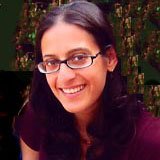
प्रो. शोभना निझावन
Prof. Shobna Nijhawan
व्यक्तिगत एवं संपर्क विवरण
| नाम (हिंदी / English) | प्रो. शोभना निझावन / Prof. Shobna Nijhawan |
|---|---|
| वर्तमान पद / दायित्व | सहायक प्रोफ़ेसर |
| संस्थान / प्रतिष्ठान | यॉर्क विश्वविद्यालय (Department of Languages, Literatures and Linguistics,York University) |
| पता (Address) | Department of Languages, Literatures and Linguistics, York University, Ross S570 4700 Keele St. Toronto, ON, M3J 1P3 USA |
| ईमेल (Email) | shobna@yorku.ca |
| दूरभाष (Phone) | उपलब्ध नहीं |
| वेबसाइट / ब्लॉग | http://www.yorku.ca/shobna/index.html |
शिक्षा एवं अकादमिक योग्यता (Education)
- 1.पीएचडी, कैलिफ़ोर्निया विश्वविद्यालय 2. एम.ए. हेदेल्बेर्ग विश्वविद्यालय
प्रकाशन एवं शोध कार्य (Publications)
Monographs and Edited Books
- 1.Women and Girls in the Hindi Public Sphere: Periodical Literature in Colonial North India. New Delhi: Oxford University Press, 2012.
- 2.(Editor). Nationalism in the Vernacular. Hindi, Urdu and the Literature of Indian Freedom. New Delhi: Permanent Black, 2010.
Articles in Journals and Book Chapters (selection)
- 1."Fallen Through the Nationalist and Feminist Grids of Analysis: Political Campaigning of Indian Women Against Indentured Labor Emigration." Indian Journal of Gender Studies 21.1. (February), pp. 111-133, 2014.
- 2."At the Margins of Empire: Feminist Configurations of Burmese Society in the Hindi Public (1917-1920)." Journal of Asian Studies 71.4 (November), pp. 1013-1033, 2012.
- 3.“Punkt, Punkt, Komma, Strich – Wer bin ich?” in Heimat in der Fremde. Band 2 (Commentary on Biographies of Second-Generation Indian Immigrants Living in Germany). Heidelberg: Draupadi Verlag, pp. 150-158, 2012.
- 4.“Civilizing Sisters: Writings on how to save women, men, society and the nation.” From Improvement to Development. ‘Civilizing Missions’ in Colonial and Post-colonial South Asia. Eds. Carey Watt and Michael Mann. London and New York: Anthem Press, pp. 193-215, 2011.
- 5."I got the point across and that is what counts.” Transcultural versus (?) linguistic competence in language teaching." Journal of the National Council of Less Commonly Taught Languages 9.1., pp. 59-81, 2011.
- 6.“The Links of Our Chains” [English translation of the Hindi feminist essay by Mahadevi Varma]. Mahadevi Varma. Essays on Women, Culture, and Nation. Ed. Anita Anantharam. Delhi: Zubaan Press; New York: Cambria Press, pp. 71-88, 2010.
- 7."Out of Place in Lindenstrasse: On the Representation of Ethnicity in a German Soap Opera." South Asian Popular Culture 6.2, pp. 161-176, 2008.
- 8.“The touchstone of a nation’s greatness is the status of its women” – Responses to colonial discourses on Indian womanhood.” South Asia Research 28.1, pp. 73-88, 2008.
- 9.“Hindi Children’s Journals and Nationalist Discourse (1910-1930).” Economic and Political Weekly 39.33, pp. 3723-3729, 2004.
उल्लेखनीय गतिविधियाँ / सहभागिता (Activities)
आपने अनेक राष्ट्रीय एवं अंतरराष्ट्रीय सम्मेलनों/कार्यशालाओं में सक्रिय रूप से भाग लिया है और अपने शोध-पत्र भी प्रस्तुत किए:
CONFERENCES, WORKSHOPS, and INVITED LECTURES (selection)
- 1.Women and the Nationalization of literature: Text and image as parallel narratives in a Hindi periodical (1927-1941). Talk delivered at the Workshop Contemporary Hindi/Urdu Literature and Arts. Princeton University (Dec. 6-7, 2013)
- 2.Annual Meeting of the Association for Asian Studies, Toronto, Canada (15-18 March, 2012)
(i) Cross-Border Panel: Gender Flows: Transnational and Inter-Imperial Circuits of Exchange in Activist Women's Writings of the Early Twentieth-Century
(ii) Paper:The Idea of Asia: Pan-Asian Feminist Conversations on Oriental Civilization, Spiritual Superiority and Asian Womanhood
- 3.Transnational Approaches to Girlhood. University of Toronto, SSHRC workshop (25 May 25, 2012)
Paper: Modelling the modern girl in the Hindi public sphere (1910s - 1920s)
- 4.The International Federation for Research in Women’s History Conference (in conjunction with the 21st International Congress of Historical Sciences), Amsterdam University (22-28 August, 2010)
(i) Panel: Racism, Nationalism and Imperialism Intersecting with Women’s Rights
(ii) Paper: Whither Colonial Hierarchies? Indian Women Writers and Global Modernity
- 5.41st Convention of the Northeast Modern Language Association, McGill University, Montreal (7-11 April, 2010)
(i) Panel: South Asia's Orients
(ii) Paper: "A World of Difference" - Travels in the Colonial Neighborhood.
- 6.Society for the History of Children and Youth Biennial Conference: Children at Risk/Children Taking Risks: Historical Inquiries in International Perspective, University of California at Berkeley (July 10-12, 2009)
(i) Panel: Childhood in colonial South Asia
(ii) Paper: Courageous Girls and Intelligent Women: Writings for Children and their Parents
- 7.York 50 Symposium: The Global Modern: Transnationalism and the Media in Asia
York Center for Asian Research, York University (May 15, 2009)
(i) Panel: Global Imaginings: From the Homeland to the World
(ii) Paper: Global (?), Modern and Colonized: Indian Women Writers’ and Activists’ International Networking in the Early Twentieth Century
- 8.European Conference on Modern South Asian Studies, University of Manchester (July 8-11, 2008)
(i) Panel: Slavery and the Raj: Representing un-free labor in colonial South Asia
(ii) Paper: In the name of national honor and self-respect. Elite women’s campaigns against indentured labor
- 9.Department of Middle East and Asian Languages and Cultures, Columbia University (November 7, 2007)
Invited Lecture: Of National Concern: Children’s Hindi Periodicals and Nationalist Discourse
- 10.Feminist Pre-conference at the South Asia Studies Conference, Madison (October 11, 2007)
South Asian Feminisms: Subjects, Audiences, Agendas
(i) Panel: Archives of Memory and Pedagogy
(ii) Paper: Feminist agendas and the Indian Independence struggle
- 11.European Conference on Modern South Asian Studies, Leiden University (June 27-30, 2006)
(i) Panel: From Improvement to Development: Civilizing Missions in Colonial and Post-Colonial South Asia
(ii) Paper: Responses to Colonial Discourses on Indian Womanhood
- 12.Mapping Channels between Ganges and Rhine, University of Toronto (May 24-26, 2006)
Paper: An Indian Affair: Green Cards, a Marriage Proposal and the Multi-Ethnic Divide in the German TV-Serial Lindenstrasse
- 13.Annual Meeting of the Association for Asian Studies, San Francisco (April 6-9, 2006)
(i) Panel: Natural Remedies: Women and Cultural Responses to Science (organizer)
(ii) Paper: Cumin, Capsules, and Colonialism: Encounters with natural and allopathic medical practices in Hindi literature
- 14.Annual Meeting of the Association for Asian Studies, Chicago (March 31-April 3, 2005)
(i) Panel: Gendered Constructions of National Identity in Twentieth-Century Periodical Literature
(ii) Paper: Gendered Citizenship? Feminist-Nationalist Questioning in Hindi Women’s Journals (1920-1930)
- 15.European Conference on Modern South Asian Studies, Lund, Sweden (July 6-9, 2004)
(i) Panel: Merging the Unsuitable? British India and Burma, c. 1850-1950
(ii) Paper: In the Neighborhood of the Colonial Present: Burmese Women in a Hindi Feminist Ethnography
- 16.Annual Conference on South Asia, University of California, Berkeley (February 15-16, 2002)
(i) Panel: Dissenting Voices: Women and the Print-Media in Early Twentieth Century India
(ii) Paper: Redefining Gender Roles: The Politics of the Hindi Women’s Journal Stri Darpan
CONFERENCES and WORKSHOPS on Teaching Languages, Literature and Culture (selection)
- 1.Engaging India: A Multidisciplinary Conference. Shastri Indo-Canadian Institute, Carleton University, Ottawa (17-18 June, 2011)
(i) Panel: Teaching South Asian Studies: Pedagogical Challenges and Curricular Innovations
(ii) Paper: Translation, Authenticity and Analysis of Literary Voices from South Asia and the Diaspora
- 2.Symposium on Innovations and Challenges in Second Language Pedagogy. University of Toronto (May 13-14, 2011)
(i) Panel: Innovations in Language Teaching
(ii) Paper: From Drill to Thrill: Innovative and Pedagogical Approaches to Language Acquisition.
- 3.Heritage Language Workshop, University of Toronto (May 7, 2009)
Paper: Can the Heritage Student Speak? Linguistic and Cultural Competency in the Grip of Academic Culture
- 4.Cultures and Languages across the Curriculum
Frankly Speaking: Challenges in Integrating Languages and Cultures into a Post-Secondary Curriculum, University of North Carolina at Chapel Hill (October 15-17, 2008)
(i) Panel: CLAC and Language Departments: In Competition or Collaboration?
(ii) Paper: “I got the point across and that is what counts”. Transcultural versus (?) linguistic competence in language teaching
- 5.Shades of Brown: Challenges, Myths and Promises. International Educational Conference, Toronto (July 8-12, 2007)
(i) Roundtable for Parents and Students: Teaching “South Asian Studies” in the University
(ii) Roundtable for Educators: South Asian Studies as Academic Discipline
- 6.Annual TEL@York Conference 2007, York University, Toronto (Mai 1-2, 2007)
Paper: Of Gender, Postpositions and the Past Tense: Seasoning Languages Courses with Technology
- 7.Annual Conference on South Asia, University of Wisconsin, Madison (October 19-22, 2006)
(i) Panel: Technology-Enhanced Learning: Lessons from the Classroom (Chair of panel)
(ii) Paper: Technology-Enhanced Learning: The blended course "Introductory Hindi"